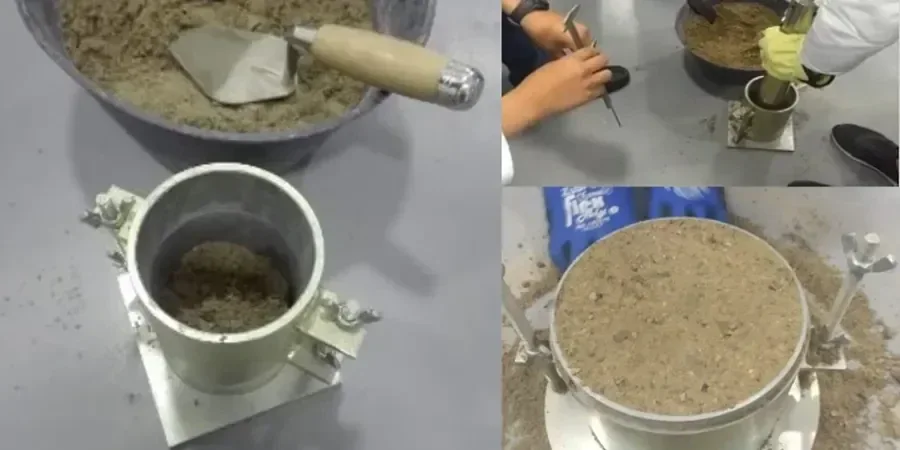
In-situ testing forms the cornerstone of geotechnical site investigation in Christchurch, providing direct measurements of soil and rock properties without the disturbance associated with sample extraction. This category encompasses a range of field-based procedures that evaluate ground conditions in their natural state, delivering data critical for foundation design, liquefaction assessment, and earthworks quality control. Following the devastating Canterbury earthquake sequence of 2010-2011, the importance of reliable in-situ data has been amplified, as engineers and regulatory bodies demand higher confidence in ground performance under seismic loading. Christchurch's variable subsurface—ranging from dense gravels of the Waimakariri fan to soft estuarine silts and peats—demands a tailored approach where in-situ methods often provide the only practical means of characterising these challenging deposits.
The local geology of Christchurch is dominated by Holocene alluvial and marine sediments overlying Pleistocene gravel formations, with the eastern suburbs and central city underlain by liquefaction-prone fine sands and silts. These deposits, part of the Christchurch Formation, exhibit highly variable density and consistency that cannot be reliably assessed from borehole logs alone. In-situ testing methods such as the field density test (sand cone method) play a vital role in determining the relative compaction of granular fills and natural soils, a parameter directly linked to liquefaction resistance. The presence of artesian groundwater pressures in parts of the city further complicates site characterisation, making in-situ pore pressure measurements and penetration testing essential for safe excavation and foundation design.
New Zealand's regulatory framework, primarily through the Building Act 2004 and the New Zealand Building Code, mandates geotechnical investigations that comply with NZS 4404:2010 for land development and subdivision, and the Earthquake Geotechnical Engineering Practice guidelines issued by MBIE. Christchurch City Council's District Plan also imposes specific requirements for ground improvement verification in Technical Category TC3 areas, where in-situ testing is often the only accepted method of demonstrating compliance. Standards such as NZS 4402 (Methods of testing soils for civil engineering purposes) provide detailed procedures for field density testing and penetration tests, ensuring consistency and legal defensibility of the data collected.
Virtually every construction project in Christchurch, from single-dwelling residential builds in liquefaction-prone suburbs to large commercial developments in the central business district, triggers the need for in-situ testing. Residential foundations on TC3 land routinely require Cone Penetration Testing (CPT) or Standard Penetration Testing (SPT) to assess liquefaction potential, while roading and infrastructure projects depend on plate load tests and nuclear densometer readings for pavement subgrade acceptance. Post-earthquake rebuilds and retrofits often involve ground improvement techniques such as stone columns or deep soil mixing, where in-situ verification testing is the final arbiter of performance. Agricultural and rural developments, including dairy shed platforms and effluent ponds, also benefit from field density testing to ensure liner integrity and structural stability on soft alluvial soils.
In-situ testing measures soil properties directly in the ground without removing samples, preserving natural stress, moisture, and structure. This is crucial in Christchurch's layered alluvial soils, where sampling can disturb sensitive silts and sands, leading to unrepresentative lab results. Methods like CPT and field density tests provide continuous profiles and immediate data, essential for assessing liquefaction susceptibility and compaction quality in variable ground conditions.
Key standards include NZS 4402 for soil testing methods, which details field density and penetration test procedures. NZS 4404:2010 governs land development and requires specific in-situ verification for earthworks. Additionally, MBIE's Earthquake Geotechnical Engineering Practice guidelines provide modules for liquefaction assessment using CPT and SPT data, directly applicable to Christchurch's post-quake regulatory environment.
In-situ tests like Cone Penetration Testing and Standard Penetration Testing provide direct measurements of soil density and strength, which are used in empirical liquefaction triggering analyses. In Christchurch's TC3 zones, these tests are mandatory to determine the depth and severity of potentially liquefiable layers, guiding foundation design and ground improvement requirements to meet Building Code performance objectives.
Field density testing is required for earthworks quality control on residential subdivisions, commercial building pads, roading and pavement construction, and utility trench backfill. In Christchurch, post-earthquake ground improvement projects—such as stone column installations or dynamic compaction—also depend on sand cone or nuclear gauge tests to verify that specified relative densities have been achieved in compacted fills.
We serve projects across Christchurch and surrounding areas. More info.