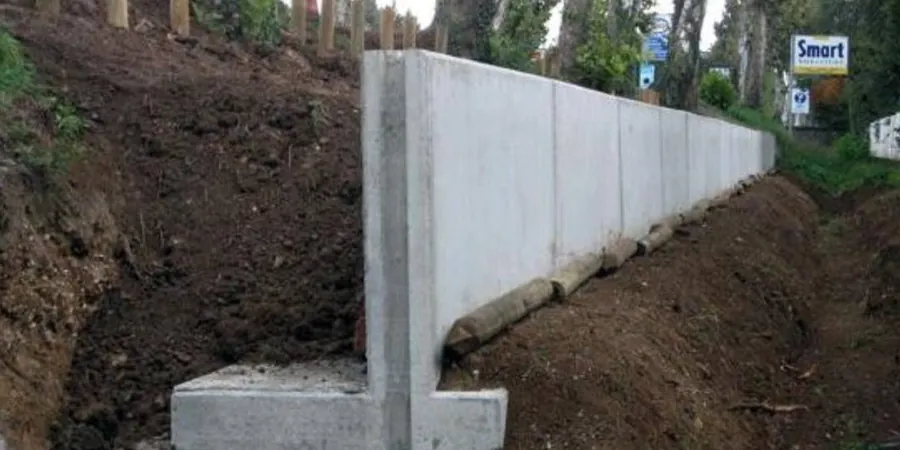
Slopes and walls in Christchurch represent a critical intersection of geotechnical engineering, urban development, and natural hazard management. This category encompasses the analysis, design, and construction of both natural and engineered slopes, as well as retaining structures that stabilise ground and protect property. In a city shaped by the Port Hills, the Canterbury Plains, and the lasting geotechnical legacy of the 2010-2011 earthquake sequence, understanding slope behaviour and wall performance is not merely a technical exercise but a fundamental requirement for safe, resilient development. Whether for residential subdivisions on hill sites, commercial buildings adjacent to cut batters, or infrastructure corridors traversing variable terrain, professional input into slope and wall systems is essential to manage risk, meet regulatory obligations, and deliver long-term performance.
Christchurch's geological setting presents a distinctive set of challenges for slope and wall design. The Port Hills are underlain predominantly by Lyttelton Volcanics—basaltic lava flows, breccias, and tuffs—which weather to produce variable strength profiles, often with a mantle of loess and colluvium. These materials are susceptible to erosion, softening upon wetting, and loss of strength under seismic loading. On the plains, the deep sequences of alluvial gravels, sands, and silts can exhibit liquefaction-prone layers and high groundwater conditions that complicate retaining wall design. The 2010-2011 Canterbury earthquakes dramatically illustrated these vulnerabilities, triggering widespread rockfall, cliff collapse, and retaining wall failures across the region. Consequently, a thorough slope stability analysis is now a standard prerequisite for almost any hillside development, informed by detailed site investigation and an understanding of local failure mechanisms.
The regulatory framework governing slopes and walls in New Zealand is robust and directly applicable to all Christchurch projects. The Building Act 2004 and the New Zealand Building Code, particularly Clause B1 (Structure), require that all building work—including retaining walls and slope stabilisation measures—be designed to resist ultimate limit state (ULS) and serviceability limit state (SLS) loads. For seismic design, NZS 1170.5:2004 sets out the earthquake actions, while the Ministry of Business, Innovation and Employment (MBIE) provides guidance on the assessment of slope stability for building consent. In Christchurch, Environment Canterbury and Christchurch City Council impose additional requirements through district plans and the Land Use Recovery Plan, often mandating site-specific geotechnical investigations, stability assessments, and peer review for slopes steeper than a specified gradient or higher than a certain threshold. The design of active/passive anchor design systems must comply with NZS 4407 for ground anchors, and all retaining structures are expected to reflect the lessons of the Canterbury earthquakes, incorporating appropriate ductility and drainage provisions.
A wide variety of project types across Christchurch demand specialist slope and wall expertise. Residential developments on the Port Hills routinely require cut-and-fill analysis, benching design, and anchored or gravity retaining wall design to create stable building platforms. Commercial and industrial sites on the plains often need cantilever or piled retaining walls to manage grade changes while resisting liquefaction-induced lateral spreading. Roading and infrastructure projects, including the Christchurch Southern Motorway and local road widenings, rely on reinforced soil slopes, soil nail walls, and rockfall protection systems to maintain corridor safety. Post-earthquake remediation works continue to generate demand for assessment and repair of existing walls, landslide stabilisation, and drainage improvement. Even smaller-scale landscaping walls on residential properties can trigger consent requirements if they exceed 1.5 metres in height or are surcharged by adjacent loads, making professional input valuable from the earliest planning stages.
Under the Christchurch District Plan, a building consent is generally required for retaining walls exceeding 1.5 metres in height, or lower walls that are surcharged by building loads, support driveways or property boundaries, or are located in a hazard overlay zone. Walls in hillside areas often trigger additional resource consent requirements related to earthworks volume and slope stability. Always check with Christchurch City Council early in the design process.
The 2010-2011 earthquakes fundamentally changed local practice by highlighting the vulnerability of unreinforced masonry walls, poorly drained slopes, and loess-mantled hillsides. Modern designs now incorporate higher seismic coefficients, mandatory drainage behind all retaining structures, ductile connections, and rigorous assessment of liquefaction and cyclic softening potential. Many sites also require specific rockfall and landslide hazard evaluation as part of the consenting process.
Active anchors are tensioned after installation to apply a pre-determined load to the retained ground or structure, actively compressing the soil mass and minimising movement. Passive anchors, such as soil nails, are not tensioned and only develop resistance as the ground deforms. The choice depends on deformation tolerances, soil conditions, and project requirements, with both systems commonly used in Christchurch hillside stabilisation works.
A slope stability assessment is typically required if your site is on or near a slope steeper than 15 degrees, shows signs of past instability, is mapped within a landslide hazard area, or involves cuts or fills exceeding 1.5 metres. Christchurch City Council's planning maps and the Canterbury Geotechnical Database provide initial screening tools, but a site-specific investigation by a chartered geotechnical engineer remains essential to confirm stability and inform design.
We serve projects across Christchurch and surrounding areas. More info.